
Unearthing Kecoughtan: The Church Beneath the Church
Behind student housing at Hampton University, archaeologists have uncovered the remains of two stacked colonial churches, offering a rare glimpse into early worship, settlement, and the layered history beneath an already historic campus.
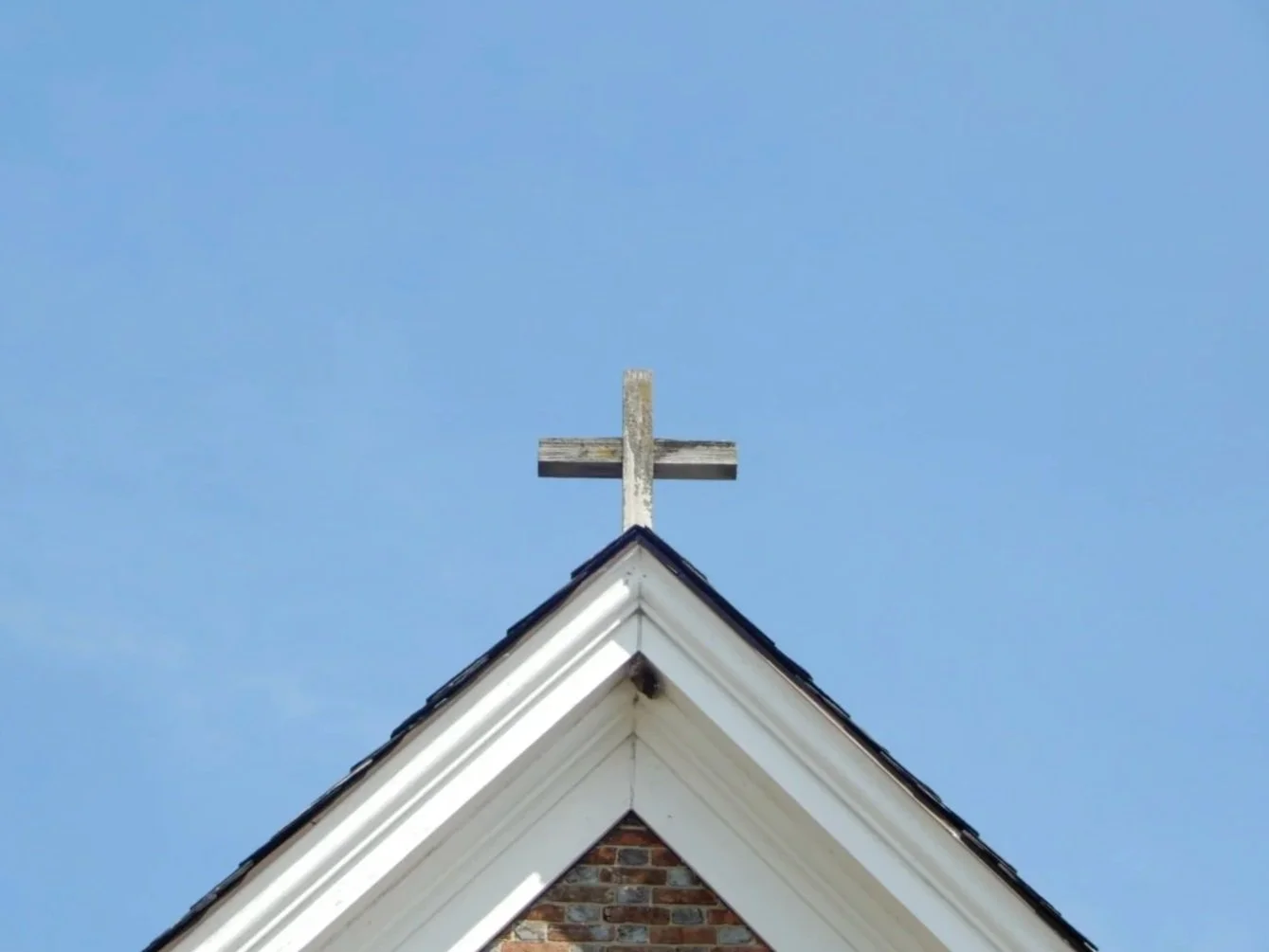
The top of the current St. John’s Church in Hampton
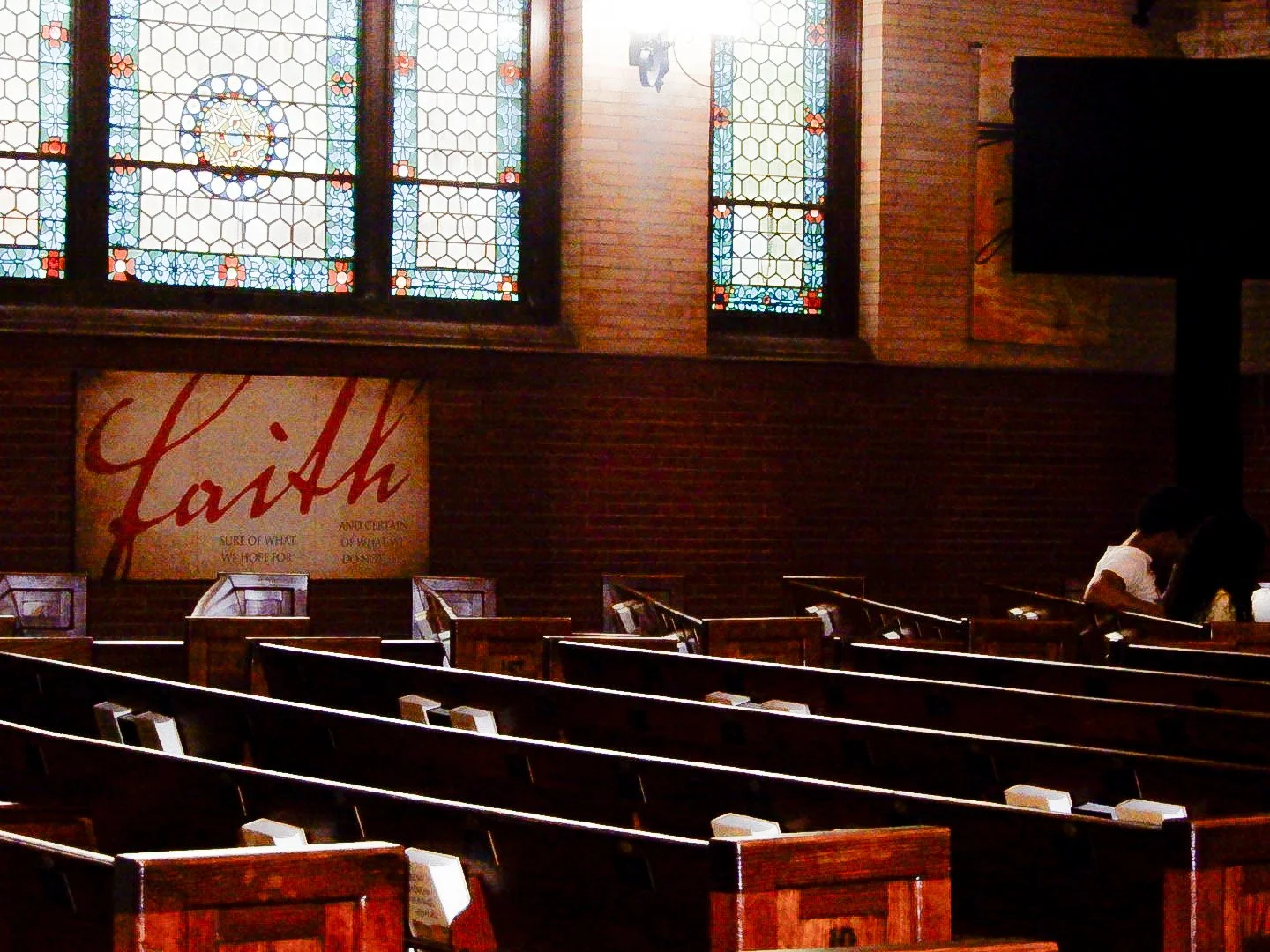
On the campus of Hampton University, it's common for students to gather dedicated in the Hampton University Memorial Church and since its erection in 1868, it has become an intentional space set aside for worship, reflection, and community.
Four centuries ago, worship looked very different and so did the campus.
The Algonquian-speaking Kikotan people inhabited the area and lived along the waterways of the Hampton Roads region for generations.
In the early 1600s English Anglican settlers established a presence in the area, marking the spread of English and the beginning of displacement and transformation for the Indigenous community already living on the land.
A structure of simple brick and wood, the church stood out in this unfamiliar place.
At the site today, the past is uncovered inch by inch.
Excavation units cut into the ground where layers of soil reveal fragments of brick, subtle shifts in color, and faint outlines of long-buried structures. Using trowels and brushes, researchers work carefully to expose what has remained hidden for centuries.
Now, it's understood that the sacred ground never disappeared. It was simply buried.
“We always thought the first church was here somewhere, we just didn’t know if it was below or adjacent,” said Matthew Tuttle, the site supervisor and archeologist with Christopher Newport University and Archaeological & Cultural Solutions, Inc. (ACS). “When we started finding features beneath the known church, it gave us hope that the earlier structure was still here”
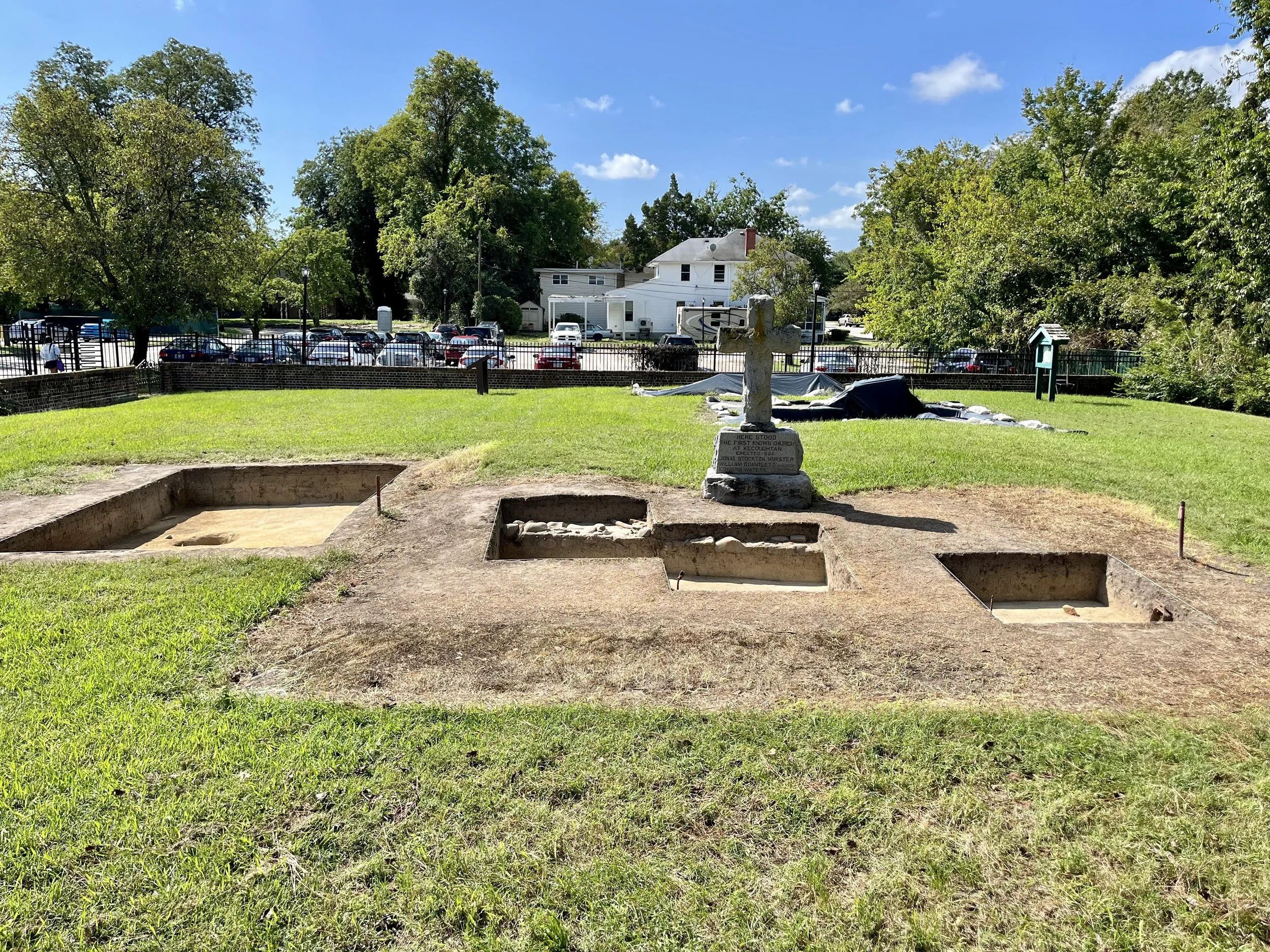
Courtesy of Matthew Tuttle
Before English Settlement
Before English settlement, the land now occupied by Hampton University was home to the Kikotan (Kecoughtan) people, an Algonquian-speaking Indigenous community in the Hampton Roads region.
According to historical accounts from the Hampton History Museum, the Kikotan occupied a wide area along the southern Chesapeake Bay and built their communities around waterways, agriculture, fishing, and trade networks that sustained their society for generations.
As English settlement expanded across Virginia, Indigenous communities experienced significant disruption, including some historical accounts describe a violent confrontation in the early 1600s that led to the displacement of Kikotan communities from the lower Virginia Peninsula.
“During English expansion, the Kikotan and other Indigenous communities either had to fight or flee,” said Dr. Catherine Porter, assistant professor of history at Hampton University. “The Kikotan would have moved west. And West isn't going to be that far. They would have eventually become a part of the neighboring tribes like the Nansemond, Pamunkey, Mattaponi, and Chickahominy.”
Today, descendants of the Kikotan are believed to live among these and other federally and state-recognized Indigenous nations in Virginia, preserving cultural continuity even as the original political identity of the Kikotan changed over time.
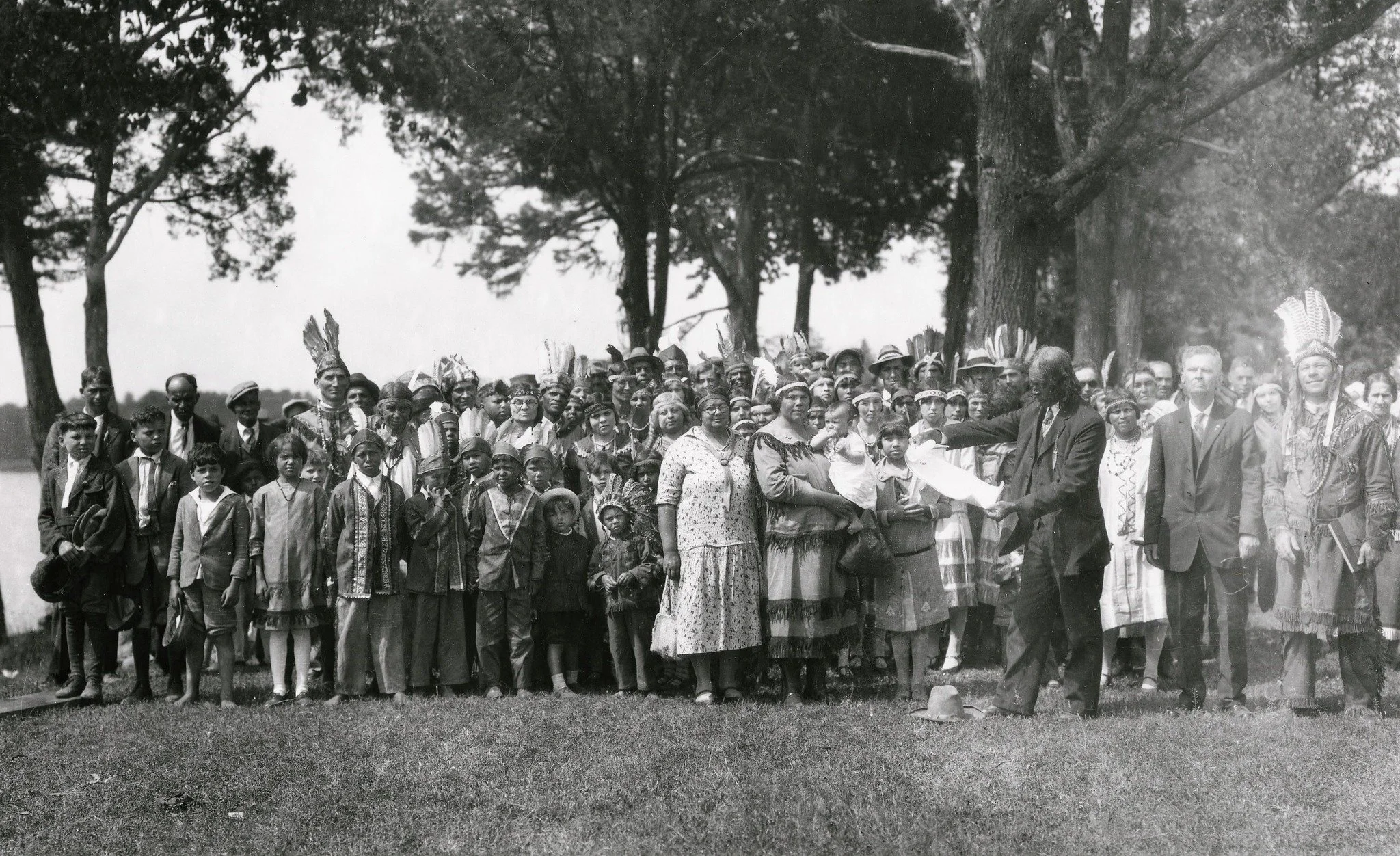
An intertribal powwow with members of the Chickahominy, Pamunkey, and Mattaponi tribes, c. 1920
Courtesy of the Virginia Indian Archive
From Kikotan to Keoughtan: English Settlement Brought Change
It was in this changing land that one of the earliest English churches in the region was established.
Church was part of a bigger movement taking shape across early Virginia. In the early 1600s, English settlers were establishing communities that reflected the structures and institutions of English society,
“When you’re talking about Virginia in the early 1600s, people weren’t coming here for religious freedom,” said Dr. Porter. “They were coming to build and expand English society, and that included the Church of England.”
Early settlement in Virginia grew outward from Jamestown, as communities established their own parishes and churches as part of organizing new settlements.
“The church was central to everything,” said Dr. Porter. “It shaped law, culture, and community, and towns were often built around it with the idea that God was at the center of daily life.”
In that context, early churches like those at Kecoughtan were more than places of prayer. They reflected a developing colonial system where religion, authority, and community were deeply intertwined.
Keoughtan Church Rediscovery
The site itself has long been recognized as historically significant.
The Second Church at Kecoughtan was built in 1624 for Elizabeth City Parish and is associated with what is now considered one of the oldest Protestant parishes in continuous existence in America.
The church was later replaced before 1668 and dismantled in 1699, as the parish relocated westward.
The rediscovery of the site in the 19th century by Jacob Heffelfinger, a Union soldier who remained in Hampton after the Civil War, brought renewed attention to the church foundations and surrounding cemetery.
By the early 1900s, a cast iron fence was installed to mark and preserve the site of the second Kecoughtan church.
That structure, dating to 1624, was well documented. But what remained uncertain for years was the exact location of the earlier church.
“We always knew that it was the second church, the 1624 church, but nobody ever knew where the 1610 church was,” said Tuttle. “There had been digs around Hampton—across the river and down the shoreline—and no one was ever able to find any evidence of it.”

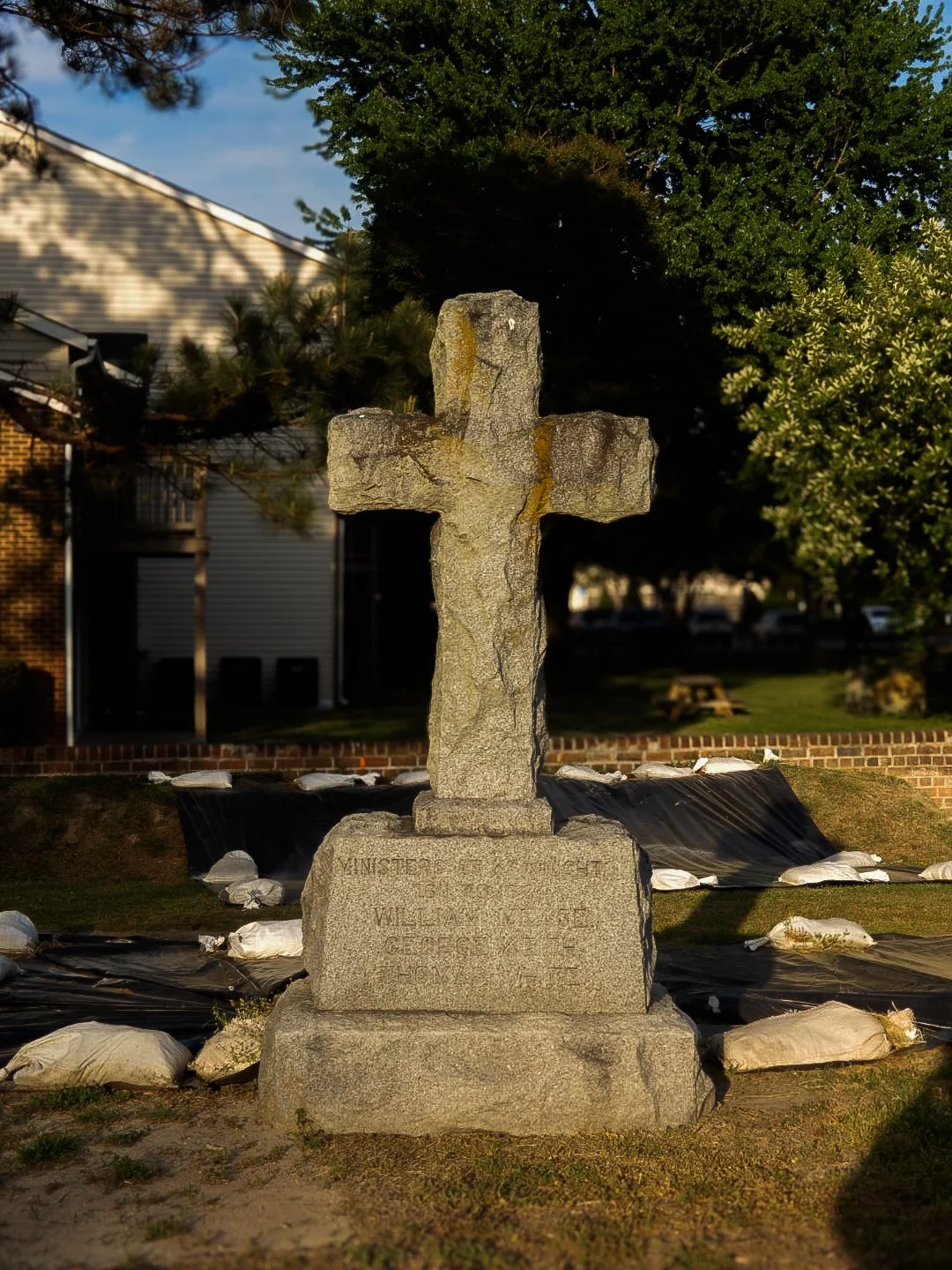
The Beginning of a New Dig
In 2018, Tuttle and his team conducted an initial probe of the site. Beneath known burial layers, they identified subsurface features that suggested something earlier might still be preserved below.
That discovery ultimately led to a full excavation, beginning in 2022, during which the team reexamined the known footprint of the second church while expanding outward into areas that had never been professionally investigated.
While excavating the known footprint, Tuttle’s team began uncovering deep post holes that did not align with the layout of the 1624 church. Unlike the shallow foundations of the later structure, these features extended nearly two feet below the surface and appeared capable of holding large timber supports.
By tracing their spacing and alignment, archaeologists began identifying a pattern, posts set at regular intervals forming corners and straight lines consistent with a much earlier building.
“We started finding post holes much deeper than the second church—about two feet down—and they didn’t match its layout,” said Tuttle. “Once we saw they formed a pattern, evenly spaced and turning corners, that’s when we realized we were looking at an entirely different, earlier building.”
The finding turns the site from a single historical footprint into something far rarer: a layered record of early colonial life, preserved in place.
The team identified three corners of what they now associate with the original 1610 church, though one corner was disrupted by a later burial, a reminder that the site also functions as an active historic cemetery where graves remain present throughout the landscape.
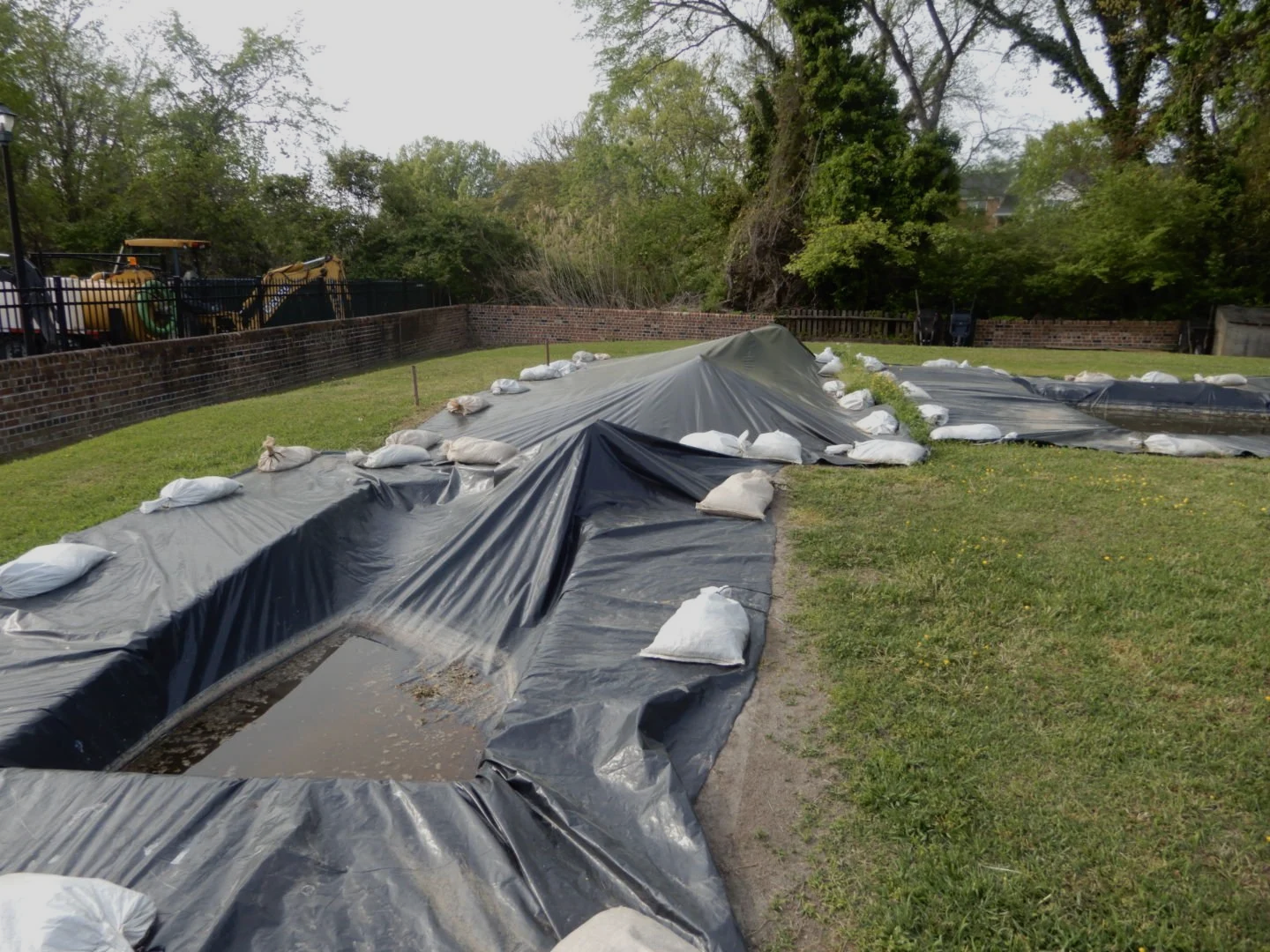
This image shows the covered dig site, where protective tarps were used to shield the excavation area from rain. Heavy rainfall collected on top of the tarps, forming pools of water that have to be manually drained using buckets.
Dusting Away the Dirt
Discoveries like this are uncommon in early American archaeology, where time, development, and environmental changes often erase earlier structures. Here, however, the physical overlap suggests a continuity of place, where one generation built directly on the foundations of another.
Alongside the structural remains, archaeologists have also uncovered graves and features near a moat, offering further insight into how the early settlement was organized.
Within the soil itself, everyday objects begin to surface, each one offering a fragment of daily life on the colonial landscape.
Among the finds is a clay tobacco pipe stem, its narrow channel still visible where it was drilled through. The piece is identified as a Chesapeake pipe, made from local clay in the region and fired for tobacco use, an everyday object tied to both colonial trade and habit.
Other discoveries include lead shot and musket balls ranging from colonial-era ammunition to more modern bullets and charcoal fragments, reflecting how the land continued to be used long after the original settlement.
Large quantities of oyster shell point to both diet and construction practices. In addition to being a food source, the shells were often crushed and used to produce lime mortar for brickmaking, linking everyday consumption directly to the building of the settlement itself.
Interpreting a site like Kecoughtan requires more than uncovering artifacts, it depends on reading the landscape itself.
Tuttle and his team analyzed oil stratigraphy, spatial relationships between features, and subtle changes in depth to distinguish between different construction phases and time periods.
Excavation units were screened through quarter-inch mesh to separate any human-made materials from surrounding soil, with every artifact labeled by unit number and soil layer before being transported to the off-site lab.
There, materials such as brick fragments, glass, ceramics, and even modern debris are cleaned, dried, cataloged, and researched as part of the formal archaeological record.
In the upper layers, the team often encounter a mix of time periods, colonial brick fragments alongside modern trash like plastic and glass, evidence of how the site has been disturbed and reused over centuries.
“It’s not until we get down through the first few layers that we actually get untouched colonial deposits,” said Tuttle.
Even small differences in depth can signal entirely different time periods. In this case, the narrow layer of earth separating the two churches, just about a foot, was enough to reveal that one structure had been built directly on top of another, decades apart.
These methods allow reconstructing for spaces that no longer exist above ground, turning faint traces in the soil into a clearer picture of how early communities lived and worshiped.
Over time, the settlement was renamed, relocated, and reshaped, but its religious roots remained anchored in the area.
Today, that legacy continues through St. John’s Episcopal Church in Hampton, with the current building serving as the fourth church in the parish since 1728.
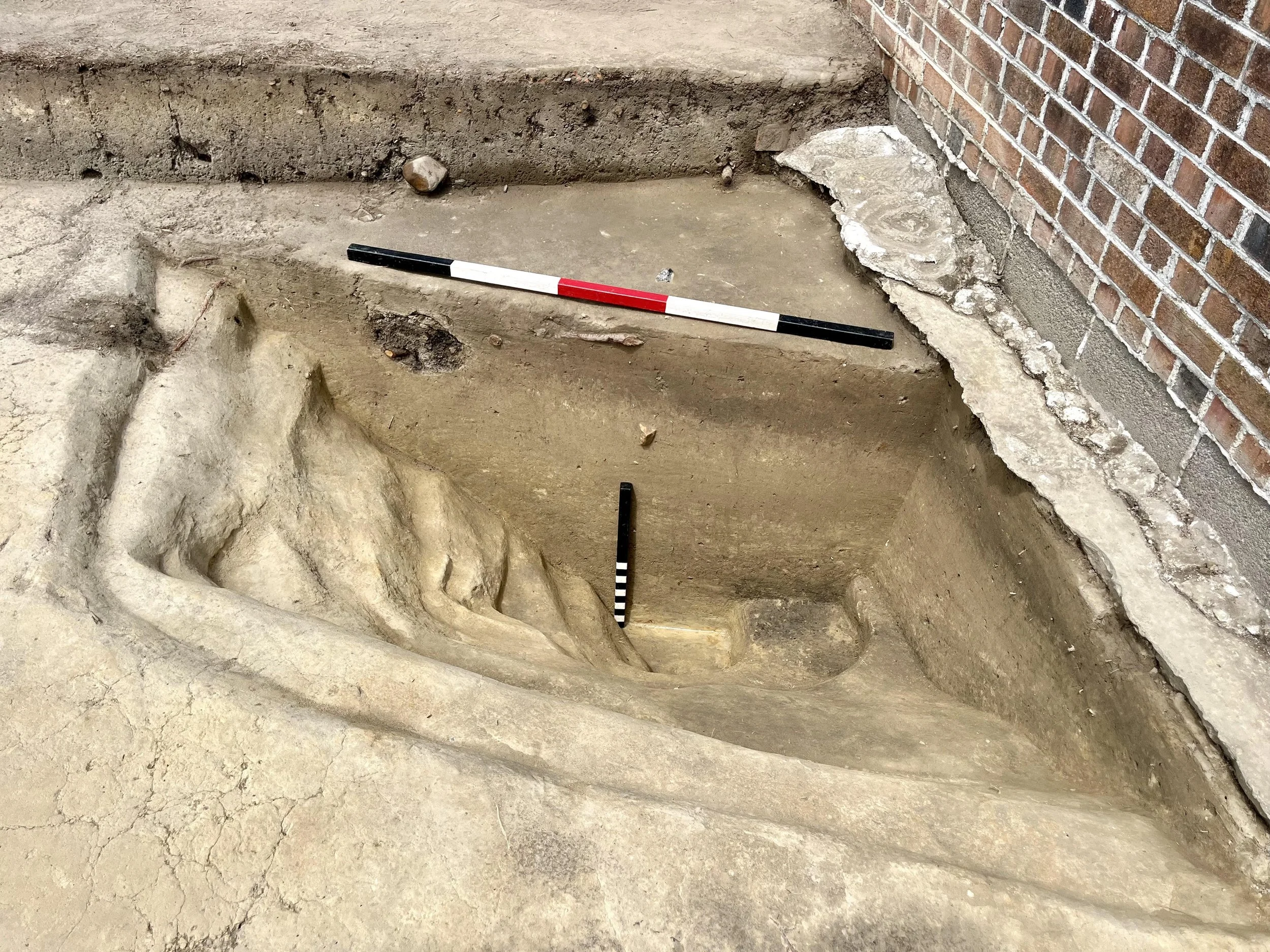
A cross-section of the ditch or moat that went around and helped protect the early site
Courtesy of Matthew Tuttle
A Site of Overlapping Histories
For Hampton University, the discovery adds a new layer of meaning to the campus landscape.
As a Historically Black University (HBCU), founded to educate newly freed African Americans following the civil war, Hampton University was built on land shaped by centuries of change.
From Indigenous stewardship to English colonization to Black education and advancement. The site represents an intersection of narratives that are often told separately, if at all.
What was once a colonial outpost, and later sacred ground, is now part of a modern academic institution, one where students walk daily across land shaped by centuries of transformation.
For students at Hampton University, the discovery is both surprising and easy to miss. Tucked behind residential buildings, the excavation site blends into the background of campus life, passed by on walks to class, dorms, and dining halls.
“Honestly I had no idea, I just thought it was a creepy graveyard that they couldn’t remove,” said Chelsea Agyei, a senior that previously lived in the Harbors apartments. “ Now that I know it’s pretty cool.”
For some, learning what is beneath the campus reshapes how they see the university itself.
“I think Hampton should speak more about this because it’s important to keep telling the stories of the past so that we don’t forget them.” said Lauryn Mitchell, a student that currently lives in the Harbors Apartments. “It makes me want to learn more about the churches. Who originally built the church?... How did it become just a gated patch of grass on a college campus?”
What once felt like ordinary ground becomes something more layered, part of a much longer story that extends far beyond their time on campus.
“To know there’s another church buried beneath us, it’s powerful. It feels like every step we take on this campus, we’re walking on the prayers, the word, and the faith that came before us,” said Trevor Huston, the Ministry Advisor for HU Campus Ministry. “In a way, we’re walking on the foundation of what sustained people then, and what still sustains us now.”
To be Buried or Not?
As the excavation work begins to wind down, attention is turning to what will ultimately become of the site, and how much of it will remain visible to the public.
For archaeologists, decisions like these are often shaped by preservation needs as much as public access. Sites are frequently documented in detail and then reburied, a method that protects fragile remains while limiting long-term exposure to weather and development.
At Kecoughtan, those conversations are still ongoing, leaving the site suspended between preservation and possibility.
“We want this to become a place people can visit and learn from, almost like an archaeological park,” said Tuttle. “Ideally, it would be protected long-term, with signage and even above-ground representations so people can actually see the footprint of the two churches.”
The stacked churches at Kecoughtan offer something few sites can: a physical reminder that history is not linear, but layered.
Behind a set of student apartments, beneath protective tarp, grass, and dirt, the earliest foundations of worship in Hampton are still there waiting to be uncovered.
It is a reminder that each generation has the opportunity to build on what came before them, sometimes quite literally.
